





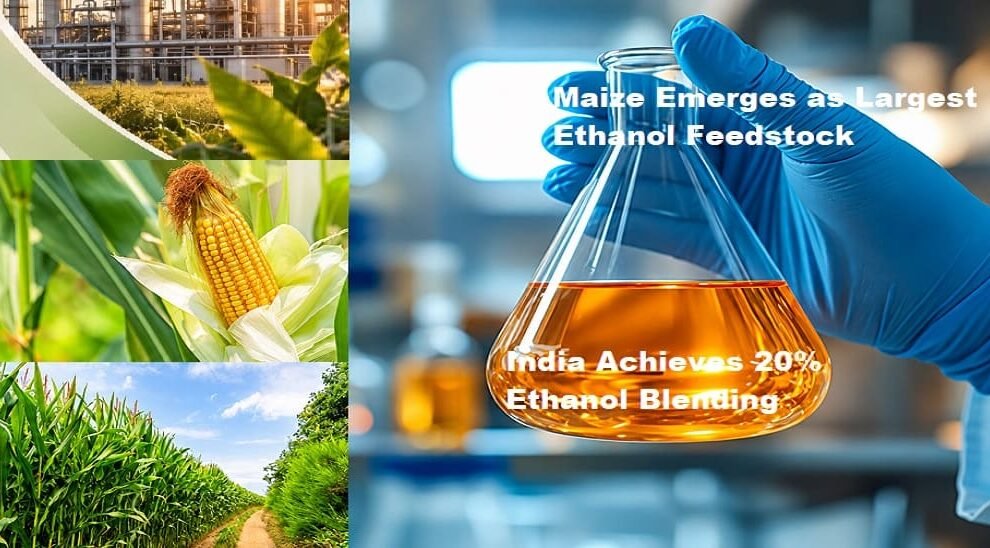
India has effectively achieved its target of 20% ethanol blending during Ethanol Supply Year (ESY) 2025-26, marking a significant milestone in the country’s efforts to reduce dependence on fossil fuels and strengthen domestic energy security. Grain-based feedstocks accounted for nearly three-fourths of total ethanol supplies, with maize emerging as the largest contributor.
According to provisional data released by the All India Distillers’ Association (AIDA), India’s average ethanol blending rate reached 19.99% during the supply year. A total of 1,134.36 crore litres of ethanol was blended as of October 31.
The country’s estimated ethanol requirement stood at 1,050 crore litres, while oil marketing companies allocated 1,196.90 crore litres. Actual ethanol supplies during the period amounted to 1,088.91 crore litres. Also Read |Livestock feed makers see rising competition for maize from ethanol producers
Grain-Based Feedstocks Contribute 73.52% of Total Ethanol Supplies
Grain-based feedstocks strengthened their position in India’s ethanol industry during ESY 2025-26, contributing 800.53 crore litres, or 73.52% of total ethanol supplies. Sugar-based sources accounted for the remaining 288.38 crore litres, representing 26.48%.
Maize emerged as the leading raw material for ethanol production, supplying 489.71 crore litres. This accounted for nearly 46% of the country’s total ethanol supplies, highlighting the growing importance of maize in India’s biofuel programme.
Other significant grain-based contributors included surplus rice procured by the Food Corporation of India (FCI), which supplied 233.95 crore litres, and damaged foodgrains, which contributed 76.87 crore litres.
The increasing use of these agricultural commodities reflects the industry’s efforts to diversify feedstock sources and establish a more flexible ethanol supply chain.
Sugar-Based Feedstocks Supply 288.38 Crore Litres
Sugar-based feedstocks continued to make a substantial contribution to India’s ethanol blending programme, supplying 288.38 crore litres during ESY 2025-26.
Sugarcane juice was the largest contributor within this category, accounting for 153.36 crore litres. B-Heavy molasses supplied 118.04 crore litres, while C-Heavy molasses contributed 16.98 crore litres.
The programme also supported the utilisation of surplus sugar resources by diverting approximately 32.45 lakh tonnes of sugar towards ethanol production. Of this quantity, around 23 lakh tonnes were utilised through sugarcane juice, while 9.44 lakh tonnes were processed through B-Heavy molasses.
This diversion has helped create an additional market for sugarcane-based products while supporting the country’s renewable fuel objectives.
AIDA Highlights Ethanol Blending Benefits for Energy Security and Agriculture
Commenting on India’s progress, AIDA President Vijendra Singh said the country’s achievement in reaching the 20% ethanol blending milestone demonstrated the potential to advance energy security, agricultural development and industrial growth simultaneously.
He attributed the progress to the combined efforts of the government, oil marketing companies, ethanol producers, farmers and the wider distillery industry.
Singh also emphasised the growing contribution of grain-based feedstocks, particularly maize and surplus FCI rice, in strengthening the diversity and resilience of India’s ethanol supply chain.
Feedstock Diversification Strengthens India’s Ethanol Industry
The provisional figures for ESY 2025-26 highlight the increasing importance of both grain-based and sugar-based distilleries in meeting India’s expanding ethanol requirements.
The growing contribution of maize and surplus foodgrains is creating additional opportunities for agricultural producers while helping ethanol manufacturers diversify their raw material sources. At the same time, sugar-based feedstocks continue to support the efficient utilisation of sugarcane resources and provide an alternative revenue stream for the sugar industry.
India’s progress towards its 20% ethanol blending target represents an important step in its broader energy transition strategy. With agricultural commodities playing an increasingly significant role in domestic fuel production, the ethanol programme is strengthening the link between the country’s agricultural economy, industrial development and renewable energy ambitions.








Add Comment