




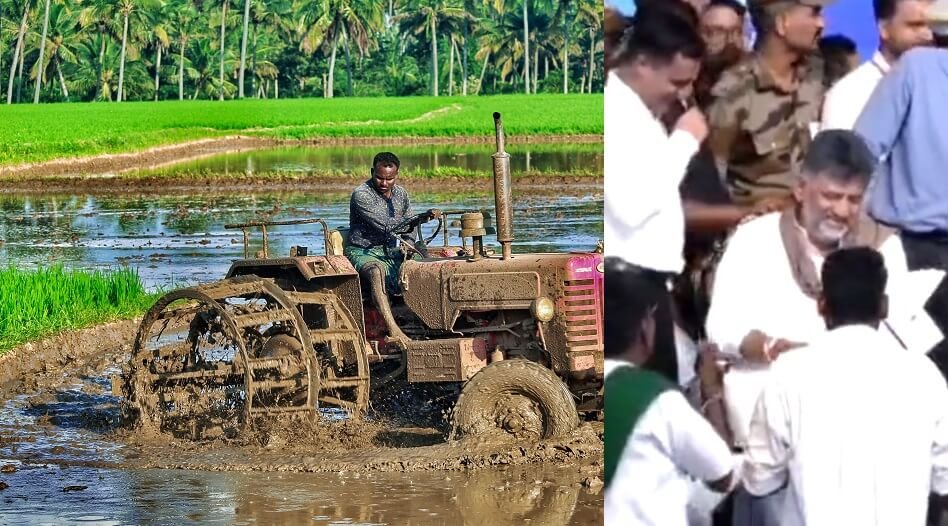
‘Girls Don’t Want Agri Bachelors’: Karnataka Farmer Makes Unusual Appeal to CM
A farmer in Karnataka has made an unusual appeal to Chief Minister D K Shivakumar, asking the government to do something for rural men who are finding it increasingly difficult to get married.
The request came during a Praja Seva programme in Piriyapatna, where the farmer highlighted the difficulties faced by unmarried agriculture doing men in villages. According to appealed farmer, many young farmers own agricultural land and houses and work hard for a living, yet struggle to find suitable marriage partners.
The farmer told the Chief Minister that women and their families often prefer men with salaried employment over those dependent on agriculture.
His unusual request reportedly left CM amused and drew laughter at the event. However, the concern behind the statement points to a deeper social and economic issue affecting some rural communities.
Why Are Rural Bachelors Finding It Difficult to Get Married?
The farmer claimed that a growing number of men, particularly those in their mid-30s and early 40s, are remaining unmarried because farming is no longer considered as financially secure as a regular salaried job.
Government positions, corporate employment and other jobs that provide a fixed monthly income are often viewed as more stable by families searching for suitable grooms.
Even owning agricultural land, which was traditionally regarded as a major sign of financial security, may not be enough to attract marriage proposals today.
According to the farmer, some families have reportedly encouraged prospective grooms to leave agriculture and look for employment in cities such as Bengaluru, Mysuru, Mangaluru and Hubballi-Dharwad.
Farming Versus a Fixed Salary
For generations, farmland has been an important measure of wealth and social standing in rural Karnataka. Owning several acres was once considered a significant advantage when families looked for marriage alliances.
But changing economic conditions appear to have altered the perception.
Agriculture depends heavily on rainfall, crop prices and market conditions. Droughts, crop failures and rising cultivation expenses can make a farmer’s annual income unpredictable.
A salaried employee, on the other hand, is generally seen as having a more dependable source of income. This perception has increasingly influenced not only career choices but also marriage preferences.
A Disturbing Claim About Unmarried Farmers
The farmer also raised a much more serious concern during his interaction with the Chief Minister. He claimed that some bachelors, after facing repeated rejection and prolonged frustration over marriage, had reportedly died by suicide.
Such claims need independent verification, but they underline the emotional and social pressures that some unmarried farming rural men may be experiencing.
The problem itself is not new. Groups of unmarried farmers in different parts of Karnataka have previously spoken publicly about the difficulties they face while searching for marriage partners.
Mandya Villages Also Facing the Issue
Parts of Mandya have witnessed similar concerns, with reports of sizeable numbers of agri men in their 30s and 40s remaining unmarried despite owning farmland and houses.
In some cases, groups of bachelors have even approached local authorities in the hope of finding a solution.
Their concerns highlight a wider transformation in rural society. Economic security is increasingly being associated with a monthly salary rather than simply with land ownership.
Karnataka’s Rural Marriage Dilemma
The farmer’s request for government intervention may sound unusual, and the Chief Minister’s reaction reflected that. Yet the issue raises important questions about the changing aspirations of rural families.
As young people increasingly move towards cities and seek stable salaried careers, farming can struggle to retain its traditional social prestige.
For unmarried farmers, the challenge is therefore not merely about finding a bride. It is also about how society perceives agriculture, financial security and rural livelihoods.
What was once considered a valuable asset of owning farmland and continuing the family’s agricultural tradition may no longer carry the same weight in today’s marriage market.
The farmer’s plea may have been unexpected, but it has drawn attention to a social issue that deserves a closer look: in parts of rural Karnataka, having land may no longer be enough to convince families that a prospective groom has a secure future.






Add Comment